Thursday, 10 March 2011

One-summit Universalism - Version 1: 10th March 2011

One-summit Universalism  


Part I - The Whole beyond the Parts

There are many paths to the top of the mountain, but only one summit.  The ‘summit’ is the exalted state of consciousness of the one who authentically & autonomously knows - and who also lives what she or he knows.

At the summit, when we look out, there is only mystery the formless whole in all directions.  

The birds have vanished into the sky,

and now the last cloud drains away.

We sit together, the mountains and me,

until only the mountains remain.

Li Po (701-762)


To introduce a second metaphor we, and all forms, emerge, like a wave on the ocean, and after a while we return into the formless whole.

In mystery we are united.  Our countless permutations of beliefs dissolve when we stand silent, word-less, before infinite mystery.

Standing before infinite mystery all are one - humanists, religionists, non-theists etc.

It is the only place at which we all are perfectly united.

At the place of mystery we are united because there are no concepts, beliefs or theology - no belief systems, no ‘I’m right and you’re wrong’.   

At the ‘top of the mountain’ there is just silence, infinite space, no time - the awe and wonder of the view stretching out infinitely in every direction.  In everyday life we get glimpses, flashes of this whole beyond this frenetic, contingent world.  We all are mystics just as we all are philosophers, and poets, painters and dancers - they all are part of being human - from babyhood onwards.

When we stand before such mystery we are on the shoreline.  It is the shore between the land of the known and knowable and the ocean of the unknown and unknowable.  At that place we can turn to face the land of concepts - or the ocean of silence.

Facing the land there is the sweetness of language and concepts but in our engagement with the world comes disappointment, fear, envy etc.  This means the ego rises - and torments.  

When we turn back to face the ocean, or lose our ‘small self’ by becoming at-one with the ocean, then the ‘past-and-future-centred’ ego has stops its raging.

The more we can live in the now the more we bridge the two, the parts and the whole.

This infinite mystery can only be pointed at, not captured in concepts, creed or belief-system.  What we need to do is hold that nowness more, to rest in it and let it expand - so that the torments of ego come back less and less - and less frequently overcome us.

We can’t capture the whole - but we can experience it - just as we experience the infinite ocean when we lose our sense of separateness in a warm, salty sea.  We just can't conceptualize it, or measure it or weigh it.  

To stand in front of infinite mystery is to experience awe and wonder and the ineffable.  Poets, mystics and seers try to convey the reality but inevitably fail - often magnificently.

We can of course deny it by saying that there is nothing beyond what we understand.

Infinite mystery can only be pointed at.  Concepts belong to the known and knowable realm.  There is no conceptualization of the infinite by the finite.  This is why for Buddhist there is no (naming of) God.  The realm of the finite cannot deal in any comprehensive sense with the realm of the infinite.  We can only inadequately, as poets and scholars, say how it is when we tremble and shiver through sensing the whole. The more we sense that whole the more relief we experience from egotistical lives, in which we guard the chimera of separate existence.  At the centre of that ego-guarding is fear of annihilation.   

The antidote lies in silence.

Part 2 - ‘Just below the summit ‘ - a chance for peace-making via ‘spiritual federalism’

Those who really know, when they stand at the summit, or just a bit further down the path up which they ascended, do not need help in recognizing others who have ascended via different paths.  

For the rest of us there is some ‘technology’ that helps us overcome our fear, insularity and need to make others into enemies.  With Karen Armstrong we can say that 1. the practice of compassion and 2. the deepening of sensibility through realization of the Golden Rule can help us toward what we might call ‘spiritual federalism’.  

By this term I simply mean that we can continue to live in the ‘state’ of our own particular belief-system whilst acknowledging a federal ‘sameness’ that transcends my and most other belief systems.  

This is based ultimately on recognition of our shared humanity; we all love and we all suffer.  

Such a ‘dual allegiance’ enhances the particularity of a chosen belief system, not the opposite - unless we are led by closed-hearted preachers.

Closed-hearted preachers have a reasons for perpetuating exclusivity of the sect they lead.  Some are gross reasons, power, money, status, money-extraction.  Some are less gross but involve fear and ideas of salvation that ‘make-wrong’ the other.

The ‘technology’ of amplifying compassion and  ‘Golden Rule realization’ is what is needed to open the hearts of those who are caged in exclusivist belief-systems.  All the great wisdom traditions provide treasure-houses of teachings to help with this aim.

There are a number of great teachers of compassion and the Golden Rule from all wisdom traditions.  For now I have chosen five.  They also point to the stillness and silence beyond the pettiness of our concept-structures.

Part 3 - Five great ‘Pointers’ and livers of compassion and the Golden Rule

I have chosen five ‘pointers’ - figures about whom no claims of Divinity are made; but who all point to the Mystery with great eloquence, great profundity, great humility.  They also have walked the talk in matters of compassion and the Golden Rule.  They also do somewhat different jobs for us.  I will provide sources for them all in due course.  I have started with Tolle - see link below.

Abdu’l-Baha

Armstrong

Heschel

Tolle

Wilber

Posted via email from sunwalking's posterous

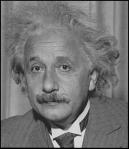
Albert Einstein Quotes on Spirituality

Albert Einstein Quotes on Spirituality


  1. I want to know how God created this world. I am not interested in this or that phenomenon, in the spectrum of this or that element. I want to know His thoughts; the rest are details.
  2. Science without religion is lame. Religion without science is blind.
  3. My religion consists of a humble admiration of the illimitable superior spirit who reveals himself in the slight details we are able to perceive with our frail and feeble mind.
  4. The further the spiritual evolution of mankind advances, the more certain it seems to me that the path to genuine religiosity does not lie through the fear of life, and the fear of death, and blind faith, but through striving after rational knowledge.
  5. Every one who is seriously involved in the pursuit of science becomes convinced that a spirit is manifest in the laws of the Universe-a spirit vastly superior to that of man, and one in the face of which we with our modest powers must feel humble.
  6. The scientists’ religious feeling takes the form of a rapturous amazement at the harmony of natural law, which reveals an intelligence of such superiority that, compared with it, all the systematic thinking and acting of human beings is an utterly insignificant reflection.
  7. There is no logical way to the discovery of elemental laws. There is only the way of intuition, which is helped by a feeling for the order lying behind the appearance.
  8. The intuitive mind is a sacred gift and the rational mind is a faithful servant. We have created a society that honors the servant and has forgotten the gift.
  9. The most beautiful thing we can experience is the mysterious; It is the source of all true art and science.
  10. We should take care not to make the intellect our god; it has, of course, powerful muscles, but no personality.
  11. Whoever undertakes to set himself up as a judge of Truth and Knowledge is shipwrecked by the laughter of the Gods.
  12. When the solution is simple, God is answering.
  13. God does not play dice with the universe.
  14. God is subtle but he is not malicious.
  15. A human being is a part of the whole, called by us Universe, a part limited in time and space. He experiences himself, his thoughts and feelings as something separated from the rest-a kind of optical delusion of his consciousness. This delusion is a kind of prison, restricting us to our personal desires and to affection for a few persons nearest to us. Our task must be to free from this prison by widening our circle of compassion to embrace all living creatures and the whole nature in its beauty.
  16. Nothing will benefit human health and increase the chances for survival of life on Earth as much as the evolution to a vegetarian diet.
  17. The man who regards his own life and that of his fellow creatures as meaningless is not merely unfortunate but almost disqualified for life.
  18. Peace cannot be kept by force. It can only be achieved by understanding.
  19. Only a life lived for others is a life worth while.
  20. The human mind is not capable of grasping the Universe. We are like a little child entering a huge library. The walls are covered to the ceilings with books in many different tongues. The child knows that someone must have written these books. It does not know who or how. It does not understand the languages in which they are written. But the child notes a definite plan in the arrangement of the books—-a mysterious order which it does not comprehend, but only dimly suspects.
  21. The important thing is not to stop questioning. Curiosity has its own reason for existing. One cannot help but be in awe when he contemplates the mysteries of eternity, of life, of the marvelous structure of reality. It is enough if one tries merely to comprehend a little of this mystery every day. Never lose a holy curiosity.
  22. What I see in Nature is a magnificent structure that we can comprehend only very imperfectly, and that must fill a thinking person with a feeling of humility. This is a genuinely religious feeling that has nothing to do with mysticism.
  23. The finest emotion of which we are capable is the mystic emotion. Herein lies the germ of all art and all true science. Anyone to whom this feeling is alien, who is no longer capable of wonderment and lives in a state of fear is a dead man. To know that what is impenetrable for us really exists and manifests itself as the highest wisdom and the most radiant beauty, whose gross forms alone are intelligible to our poor faculties - this knowledge, this feeling ... that is the core of the true religious sentiment. In this sense, and in this sense alone, I rank myself among profoundly religious men.
  24. The real problem is in the hearts and minds of men. It is easier to denature plutonium than to denature the evil spirit of man.
  25. True religion is real living; living with all one’s soul, with all one’s goodness and righteousness.
  26. Intelligence makes clear to us the interrelationship of means and ends. But mere thinking cannot give us a sense of the ultimate and fundamental ends. To make clear these fundamental ends and valuations and to set them fast in the emotional life of the individual, seems to me precisely the most important function which religion has to form in the social life of man.

Check out the source blog by clicking on the link.

Posted via email from sunwalking's posterous

Are you still dissatisfied when munching concepts, however delicious? - Eternal wisdom for our time from the mystical heart of Abraham Joshua Heschel

I am, I confess, a serial concept muncher!


The sublime Heschel said,

“Concepts are delicious snacks with which
we try to alleviate our amazement.”

(Who is Man p.88)

He also once wrote: “We may doubt anything, except that we are struck with amazement. When in doubt, we raise 
questions; when in wonder, we do not even know how to ask a question. Doubts may 
be resolved, radical amazement can never be erased. There is no answer 
in the world to [our] radical wonder. Under the running sea of our theories
 and scientific explanations lies the aboriginal abyss of radical amazement.” 
(Man Is Not Alone, p. 13)

Heschel's deep concern was to persuade us that the state of awe and wonder, experience of the ineffable, was more truly deeply human than snacking on concepts that, delicious though they are, can never bring true satisfaction.

Of course concepts are the stuff of beliefs and beliefs are what divide us.

Wonder, awe, amazement, experience of the ineffable, is the wordless state as we are struck dumb before the whole of Mystery.  In silence we are united.

-0-

"Our concern with environment cannot be reduced to what can be used, to what can be grasped. Environment includes not only the inkstand and the blotting paper, but also the impenetrable stillness in the air, the stars, the clouds, the quiet passing of time, the wonder of my own being. I am an end as well as a means, and so is the world: an end as well as a means. My view of the world and my understanding of the self determine each other. Forfeit your sense of awe, let your conceit diminish your ability to revere, and the world becomes a market place for you. The complete manipulation of the world results in the complete instrumentalization of the self."

"Humankind will not die out for lack of information, but for we may perish for want of appreciation."

"In a free society, some are guilty, but all are responsible."

Abraham Joshua Heschel

The antidote to our current self destruction is to be found in the glorious vision of what it is to be truly human

as Heschel describes it in his Who is Man?


Rabbi Abraham Joshua Heschel (2nd from right) in the Selma Civil Rights March with Martin Luther King, Jr. (4th from right)

Rabbi Abraham Joshua Heschel (2nd from right) in the Selma Civil Rights Marchwith Martin Luther King, Jr. (4th from right)


-0-

The utterances of the heart—unlike those of the discriminating intellect—
always relate to the whole.”

(Jung)

-0-


Abraham Joshua Heschel (January 11, 1907– December 23, 1972), teacher, activist, social critic, theologian, poet, philosopher, and scholar.

Posted via email from sunwalking's posterous

What’s the worst thing about First Past The Post? | Yes to fairer votes - Yes to AV - Alternative Vote

1. FPTP means politicians take voters for granted

With First Past the Post voters are not created equal. Parties steer well clear of the 'safe seats' the system creates, because they know those elections will be won or lost without them lifting a finger.

Either way it's simply not worth the effort. Instead it's in the few seats where the winner isn't known where politicians do all they can to win. And the result? A handful of lucky voters in these marginal seats decide our elections.

In the 2010 election, most of us were ignored by political parties; the result was effectively decided by just 460,000 people — just 1.6% of the electorate. FPTP lets parties cynically target that handful of marginal voters in a few marginal seats.

Posted via email from sunwalking's posterous

Scarboro Missions - How to Order the Golden Rule Poster

Media_httpwwwscarboro_qjamc

For those who aren't locked into exclusivity and for those who practice 'Compassion and the Golden Rule'

Scarboro Missions seem to exemplary in that they are clearly committed to their faith but have supported the Golden Rule initiative for a very long time. Bravo!

Click on link to get their materials.

Posted via email from sunwalking's posterous

No two religions agree - right? Peace impossible - right? Check this out!

The Golden Rule Across the World's Religions
Thirteen Sacred Texts - English Version

Bahá'í Faith

Lay not on any soul a load that you would not wish to be laid upon you, and desire not for anyone the things you would not desire for yourself.

Bahá'u'lláh, Gleanings

Buddhism

Treat not others in ways that you yourself would find hurtful.

The Buddha, Udana-Varga 5.18

Christianity

In everything, do to others as you would have them do to you; for this is the law and the prophets.

Jesus, Matthew 7:12

Confucianism

One word which sums up the basis of all good conduct....loving-kindness. Do not do to others what you do not want done to yourself.

Confucius, Analects 15.23

Hinduism

This is the sum of duty: do not do to others what would cause pain if done to you.

Mahabharata 5:1517

Islam

Not one of you truly believes until you wish for others
what you wish for yourself.

The Prophet Muhammad, Hadith

Jainism

One should treat all creatures in the world as one would like to be treated.

Mahavira, Sutrakritanga 1.11.33

Judaism

What is hateful to you, do not do to your neighbour. This is the whole Torah; all the rest is commentary. Go and learn it.

Hillel, Talmud, Shabbath 31a

Native Spirituality

We are as much alive as we keep the earth alive.

Chief Dan George

Sikhism

I am a stranger to no one; and no one is a stranger to me.
Indeed, I am a friend to all.

Guru Granth Sahib, p.1299

Taoism

Regard your neighbour's gain as your own gain and your neighbour's loss as your own loss.

Lao Tzu, T'ai Shang Kan Ying P'ien, 213-218

Unitarianism

We affirm and promote respect for the interdependent web of all existence of which we are a part.

Unitarian principle

Zoroastrianism

Do not do unto others whatever is injurious to yourself.

Shayast-na-Shayast 13.29


Acknowledgements: This original English version was prepared by Paul McKenna.

Published by Scarboro Missions (Toronto, Canada)
Copyright © Scarboro Missions 2000

Great resources for those interested in Karen Armstrong's latest initiative on Compassion and the Golden Rule are to be found at www.scarboromissions.ca

Posted via email from sunwalking's posterous

Wednesday, 9 March 2011

BBC News - AV voting referendum: Katie Ghose's viewpoint

AV voting referendum: Katie Ghose's viewpoint

Katie Ghose, chief executive of the Yes to Fairer Votes campaign Katie Ghose says the current system is broken and change is needed

A referendum will be held on 5 May on whether to keep the first-past-the-post system for electing MPs or to switch to the Alternative Vote (AV). The BBC is asking a variety of people to give their view.

"The Alternative Vote is a small change that will make a big difference - making MPs work harder to get and stay elected, and giving you more of a say.

No wonder the old political establishment will say anything to cling on to the old rules.

They will say anything to defend a broken system that can let them win power with just one in three voters on their side.

A system that has let them enjoy jobs for life in safe seats. A system that has bred the complacency we all saw in the expenses scandal.

The last general election was decided by fewer than 450,000 voters in marginal seats.

Two thirds of our MPs don't have the majority of voters on their side - so most of us are now represented by MPs that most of us didn't vote for.

It is not right, and in this referendum you can change the rules.

AV takes what works with our current system and improves on it - making MPs work harder to win and keep their jobs.

THE REFERENDUM CHOICE

At the moment MPs are elected by the first-past-the-post system, where the candidate getting the most votes in a constituency is elected.

On 5 May all registered UK voters will be able to vote Yes or No on whether to change the way MPs are elected to the Alternative Vote system.

Under the Alternative Vote system, voters rank candidates in their constituency in order of preference.

Anyone getting more than 50% of first-preference votes is elected.

If no-one gets 50% of votes, the candidate with the fewest votes is eliminated and their backers' second choices allocated to those remaining.

This process continues until one candidate has at least 50% of all votes in that round.

A 'Yes' vote means all the candidates who want to be your next MP will have to aim for 50% support in the communities they seek to represent. MPs will have to work harder to win - and keep - your support, reaching out to voters they can no longer afford to ignore.

A 'Yes' vote will give you more say. AV lets you can rank candidates and show support for anyone you feel is up to the job. So if your favourite candidate doesn't win, you can still help decide your next MP.

Good news for the millions of us forced into tactical voting.

Bad news for extremists, like the BNP, because candidates who will not reach out have no future.

AV is not revolutionary. It is a small, sensible step that builds on the current system, preserving and strengthening the link between MPs and their voters.

This referendum is a straight choice between a broken system and a better alternative.

Say Yes to AV."

Posted via email from sunwalking's posterous

Tuesday, 8 March 2011

TED Blog | On the 12 steps to a compassionate life: Q&A with Karen Armstrong

On the 12 steps to a compassionate life: Q&A with Karen Armstrong

This week, religious scholar and 2008 TED Prize winner Karen Armstrong released 12 Steps to a Compassionate Life, a practical guide to the understanding and practice of compassion. On Christmas eve, the TED Blog had a chat with Karen about the ways people around the world are embracing the Charter for Compassion — the result of her TED Prize wish –- a year from its launch, the importance of kindness in discourse, and the perennial human struggle to put others first.

How did this book come about?

For the last couple of years, since winning the TED Prize and launching the Charter for Compassion, I’ve been going around the world promoting compassion. Frequently, people ask, “Well, how on Earth do we begin? It all seems so huge.”

People are hungry to understand what compassion means and how to go about practicing it. But simply deciding to become compassionate is too daunting. Meanwhile, we’re so uneducated about compassion. It’s often just equated with pity. But the word “compassion” means to feel or experience with the other person – to put yourself consistently in other another’s shoes. We have to feel and take responsibility for the well-being of others, whoever they are.

So the book, which is modeled on the Alcoholics Anonymous 12-step program, offers a step-by-step guide to understanding compassion, then integrating it into daily life. Each step – beginning with “Learn About Compassion” and ending with “Love Your Enemies” – is a practice. The idea is to start with step one and not move on until the practice has slowly become part of your daily routine.

We’ve had a very excited response so far. People are saying, “Oh, thank heavens, now we can finally get down to it and find out what to do.”

How have people been using the Charter, and what role will the book play in helping to achieve its goals?

The Charter doesn’t tell people what to do, but institutions and organizations already working on compassionate issues are applying its principles to their own needs. We’ve got 150 partners now worldwide, with a wide variety of initiatives.

One partner, for example, has devised a program for prison reform, whereby inmates are treated in a more compassionate way. It’s a very detailed work and psychological plan. When it put into practice, it was hoped that violence within the prisons would decrease by 2.5 percent. In fact, there was a 100 percent drop.

We’re also developing a 10 Year Campaign for Compassionate Cities project. It started in Seattle, which affirmed the Charter declared itself a City of Compassion last April. They’re encouraging other cities worldwide to join them, gradually building up a network of compassionate cities. We hope that once this is set up, students in different cities will be able to form electronic friendships so there can be exchanges to help break down the residue of prejudice and misunderstanding.

Charter ambassadors in Pakistan, meanwhile, are making a big push to create courses in compassion in schools, colleges and universities. Pakistan may become one of the leaders of the Charter, which would be an amazing thing – and a hugely positive message to the world – given that they are on the frontline of our present problems.

I hope the book will serve as a practical guide in all these initiatives. To address the special needs of Pakistan, I’ve written a short supplement, stressing an Islamic take on the 12 steps. And in the cities project, there’s the idea that a whole city would read the book for awhile. Online discussions about the book across cultures are a possibility, too.

What do you think is the biggest obstacle to experiencing compassion or understanding compassion, and then more importantly, acting on it?

Oh, just superciliousness, I think – a feeling of sophisticated disdain that “This won’t work.” And secondly, a sense of defeat, that the world’s problems are of such magnitude that people feel paralyzed. Also, there’s egotism: people don’t want to put others before themselves.

We are addicted to our egotism, our likes and dislikes and prejudices, and depend upon them for our own sense of identity. When we come out with a clever and unpleasant remark about somebody else, we get a rush of self-satisfaction. Unfortunately, that hit poisons us, and it poisons the atmosphere around us.

I begin the book by explaining, almost in neurological terms, how central our survival mechanism is, and how it can make us lash out violently at others, making people aware of these aggressive tendencies. These automatic reflexes are very strong. If a tiger suddenly jumps into the room, we’re designed to get up and run for our lives or shoot it, not sit and meditate, or try to make friends with it.

But we can’t afford that aggressive tendency to dominate our dangerously polarized world. People are reluctant to accept that our enemies are not separate from ourselves, and treat them with contempt, or with violence. And we still think suffering happens far away. In fact, we are connected whether we like it or not – we’re electronically, educationally, financially and economically interdependent as never before – and our perceptions haven’t yet caught up with that. Compassion is now central to our survival, and the book tries to help people to integrate this global thinking into their daily lives.

Do you think that in the past, compassion was more prevalent, and as societies became more secular we somehow lost our capacity for it? Or has human capacity for compassion has evolved over time?

No. I think it’s always been a struggle to be compassionate. It’s a struggle to our dying day, because we like to put ourselves first. Religions have always stressed that compassion is not only central to religious life, it is the key to enlightenment and it the true test of spirituality. But there have always have been those who’d rather put easier goals, like doctrine conformity, in place. We’ve made religion simply a matter of believing a set of doctrines – so much so that we call religious people “believers”. The practice of compassion is left far behind.

Compassion is a practically acquired knowledge, like dancing. You must do it and practice diligently day by day. A trained body can perform feats that are utterly impossible for an untrained body, which look inhuman but remain human. By practicing compassion fastidiously, it’s possible to acquire new capabilities in mind and heart, but you must work at it.

I’m particularly anxious to make us conscious of the lack of compassion in public and private discourse. Debates in society are often extremely aggressive. Look at the recent election in the United States, or the level of rhetoric that has surfaced over this community center near Ground Zero. In academic media, mainstream media, politics – debate is no longer an effort to seek the truth. Instead we want to attack, humiliate and defeat our opponents. Socrates said that dialogue must be conducted gently, and the point of dialogue is that nobody can win because all the participants end up realizing how little they know.

Do you find it a struggle to be compassionate on a daily basis?

Of course. I used to be a very unkind person because I was so unhappy

Click on link to read the full article

Posted via email from sunwalking's posterous

How much of the world's wisdom is encapsulated in the first 822 words of Eckhart Tolle's 'Stillness Speaks'?

File:Rose Amber Flush 20070601.jpg

STILLNESS SPEAKS Eckhart Tolle

"The human condition: lost in thought."

Chapter 1: Silence & Stillness 


1) Stillness is your essential nature. What is stillness? The inner space or awareness in which the words on this page are being perceived and become thoughts. Without that awareness, there would be no perception, no thoughts, no world. -0- 


2) When you lose touch with inner stillness, you lose touch with yourself. When you lose touch with yourself, you lose yourself in the world.

 -0-

3) Your innermost sense of self, of who you are, is inseparable from stillness. This is the I Am that is deeper than name and form.

 -0-


4) Stillness is your essential nature. What is stillness? The inner space or awareness in which the words on this page are being perceived and become thoughts. Without that awareness, there would be no perception, no thoughts, no world. -0-


5) You are that awareness, disguised as a person.

-0-


6) The equivalent of external noise is the inner noise of thinking. The equivalent of external silence is inner stillness.

 -0-

7) Whenever there is some silence around you listen to it. That means just notice it. Pay attention to it. Listening to silence awakens the dimension of stillness within yourself, because it is only through stillness that you can be aware of silence.

 -0- 

8) See that in the moment of noticing the silence around you, you are not thinking. You are aware, but not thinking.

-0-


9) When you become aware of silence, immediately there is that state of inner still alertness. You are present. You have stepped out of thousands of years of collective human conditioning.

-0


10) Look at a tree, a flower, a plant. Let your awareness rest upon it. How still they are, how deeply rooted in Being. Allow nature to teach you stillness.

-0-


11) When you look at a tree and perceive its stillness, you become still yourself. You connect with it at a very deep level. You feel a oneness with whatever you perceive in and through stillness. Feeling the oneness of yourself with all things is true love.

-0-


12) Silence is helpful, but you don’t need it in order to nd stillness. Even when there is noise, you can be aware of the stillness underneath the noise, of the space in which the noise arises. That is the inner space of pure awareness, consciousness itself.

 -0-

13) You can become aware of awareness as the background to all your sense perceptions, all your thinking. Becoming aware of awareness is the arising of inner stillness.

-0-


14) Any disturbing noise can be as helpful as silence. How? By dropping your inner resistance to the noise, by allowing it to be as it is, this acceptance also takes you into that realm of inner peace that is stillness.

 -0-

15) Whenever you deeply accept this moment as it is no matter what form it takes you are still, you are at peace.

-0-


16) Pay attention to the gap the gap between two thoughts, the brief, silent space between words in a conversation, between the notes of a piano or flute, or the gap between the in-breath and out-breath.

 -0- 

17) When you pay attention to those gaps, awareness of "something" becomes just awareness. The formless dimension of pure consciousness arises from within you and replaces identication with form.

-0-


18) True intelligence operates silently. Stillness is where creativity and solutions to problems are found.

-0-


19) Is stillness just the absence of noise and content? No, it is intelligence itself the underlying consciousness out of which every form is born. And how could that be separate from who you are? The form that you think you are came out of that and is being sustained by it.


20) It is the essence of all galaxies and blades of grass; of all flowers, trees, birds, and all other forms.

-0-


21) Stillness is the only thing in this world that has no form. But then, it is not really a thing, and it is not of this world.

-0-


20) When you look at a tree or a human being in stillness, who is looking?  Something deeper than the person.  Consciousness is looking at its creation. -0-


21) In the Bible, it says that God created the world and saw that it was good. That is what you see when you look from stillness without thought.

-0-


22) Do you need more knowledge? Is more information going to save the world, or faster computers, more scientific or intellectual analysis? Is it not wisdom that humanity needs most at this time?

 -0-

23) But what is wisdom and where is it to be found? Wisdom comes with the ability to be still. Just look and just listen. No more is needed. Being still, looking and listening activates the non-conceptual intelligence within you. Let stillness direct your words and actions. -0-
                         
822 words

----------------------------


Posted via email from sunwalking's posterous

Monday, 7 March 2011

What's your preferred definition of 'namaste'?


"I honor the Spirit in you which is also in me." -- attributed to but not claimed by author Deepak Chopra

"I honor the place in you in which the entire Universe dwells, I honor the place in you which is of Love, of Integrity, of Wisdom and of Peace. When you are in that place in you, and I am in that place in me, we are One."

"That which is of God in me greets that which is of God in you."

"The Divinity within me perceives and adores the Divinity within you.'

My preferred definition is the second one;

Posted via email from sunwalking's posterous

Charter for Compassion - One Year Anniversary ft. Rainn Wilson

An Islamic view of Compassion and Empathy & The Golden Rule

Have most of us in the UK been scammed as well?

VIDEO: America Is NOT Broke

America is not broke.

Contrary to what those in power would like you to believe so that you'll give up your pension, cut your wages, and settle for the life your great-grandparents had, America is not broke. Not by a long shot. The country is awash in wealth and cash. It's just that it's not in your hands. It has been transferred, in the greatest heist in history, from the workers and consumers to the banks and the portfolios of the uber-rich.

Today just 400 Americans have the same wealth as half of all Americans combined.

Let me say that again. 400 obscenely rich people, most of whom benefited in some way from the multi-trillion dollar taxpayer "bailout" of 2008, now have as much loot, stock and property as the assets of 155 million Americans combined. If you can't bring yourself to call that a financial coup d'état, then you are simply not being honest about what you know in your heart to be true.

And I can see why. For us to admit that we have let a small group of men abscond with and hoard the bulk of the wealth that runs our economy, would mean that we'd have to accept the humiliating acknowledgment that we have indeed surrendered our precious Democracy to the moneyed elite. Wall Street, the banks and the Fortune 500 now run this Republic -- and, until this past month, the rest of us have felt completely helpless, unable to find a way to do anything about it.

I have nothing more than a high school degree

Click on link to read a transcript of MM's speech.

Posted via email from sunwalking's posterous

Dr. Don Beck | Spiral Dynamics Integral (SDi)

“Einstein said that the problems we have created cannot be solved with the same thinking that created them. And this is the hope that we have: that in the very dangerous and precarious global situations that we are in today, we could prepare the breeding ground and the fertile soil and the habitats to generate what the next models of existence will be. We have reached that stage where our successes and our failures have produced problems that we simply cannot solve, in the old Einsteinian sense, at the same level that they were created. Now is the time to begin once again, as Clare W. Graves would say, this never-ending quest of ours.”
~ Dr. Don Beck

When I get to understand it I'll know whether or not I believe it!

Posted via email from sunwalking's posterous

Sunday, 6 March 2011

Twelve Concrete Ways To Live A 'Compassionate Life' : NPR - listen to the interview

Twelve Concrete Ways To Live A 'Compassionate Life'

US National Public Radio interview with Karen Armstrong

Click on link to go to audio and transcript form of the interview.

Posted via email from sunwalking's posterous

Karen Armstrong says religions are part of the problem - is she right?

From Confucius to Oprah, people have preached compassion for centuries. But how often is it put into practice? Karen Armstrong believes religion, which should advocate for compassionate living, is often part of the problem. In Twelve Steps To A Compassionate Life, she describes ways to add kindness to daily routines.

In light of recent events — the shootings at Rep. Gabrielle Giffords' event in Arizona, and the assassination of Punjab province Gov. Salman Taseer in Pakistan — Armstrong's message is especially poignant. "There's a mood of despair around, whether we're Easterners or Westerners," Armstrong tells NPR's Neal Conan. "And despair is a dangerous thing, because once people lose hope, they can resort to extreme measures."

Cover Of 'Twelve Steps To A Compassionate Life'

Twelve Steps To A Compassionate Life
By Karen Armstrong
Hardcover, 240 pages
Knopf
List price: $22.95

Read An Excerpt

Armstrong admits compassion isn't a very popular virtue. "People often prefer to be right," she says. And though she offers these 12 steps, it's not a get-compassionate-quick scheme. "This is a struggle for a lifetime, because there are aspects in it that militate against compassion."

For example, it's hard to love your enemies. We are driven by our legacy from our reptilian ancestors, Armstrong says. It "makes us put ourselves first, become angry, [and] when we feel threatened in any way, we lash out violently."

Armstrong says she struggles with compassion, "all the time, every day." She admits to a sharp tongue, and "like everybody, I feel I've suffered, I feel I've been damaged, I meditate unpleasantly on my enemies and feel this corrosive sense of anger."

But her religious studies kept guiding her back to the theme of compassion. In histories of Jerusalem, God, even fundamentalism, compassion popped up again and again. And that's what frustrates her.

"The religions," she says, "which should be making a major contribution to one of the chief tasks of our generation — which is to build a global community, where people of all opinions and all ethnicities can live together in harmony — are seen as part of the problem, not as part of the solution."

Despair is a dangerous thing, because once people lose hope, they can resort to extreme measures.

The golden rule, a commonality throughout religion and guiding force for compassion, "asks you to look into your own heart, discover what gives you pain, and then refuse under any circumstance whatsoever to inflict that pain on anyone else." It's tricky, because each situation and individual must be evaluated differently.

I'd settle for a major raising of consciousness re compassion and The Golden Rule!

Posted via email from sunwalking's posterous

KAREN ARMSTRONG'S 12 STEPS: Does hope lie only in raising massively consciousness of the centrality of compassion and The Golden Rule?


'Love your enemies' - It's tough

Armstrong admits compassion isn't a very popular virtue. "People often prefer to be right," she says. And though she offers these 12 steps, it's not a get-compassionate-quick scheme. "This is a struggle for a lifetime, because there are aspects in it that militate against compassion." For example, it's hard to love your enemies. We are driven by our legacy from our reptilian ancestors, Armstrong says. It "makes us put ourselves first, become angry, [and] when we feel threatened in any way, we lash out violently." Armstrong says she struggles with compassion, "all the time, every day." She admits to a sharp tongue, and "like everybody, I feel I've suffered, I feel I've been damaged, I meditate unpleasantly on my enemies and feel this corrosive sense of anger."  SOURCE

Armstrong is getting more up-front, more whole, more wise - more compassionate - unlike a very large proportion of religionists.  

Does hope lie only in raising massively consciousness of the centrality of compassion and The Golden Rule?

Posted via email from sunwalking's posterous

Very moving video of the great film critic Roger Ebert 'finding his voice'

Saturday, 5 March 2011

Retirement Plan: Prison « Aging and Other Inconveniences

Pension gone?  Retirement fund stolen?  Cost of health benefits unaffordable?  Consider the retirement plan I’ve decided on for my future: Prison.

My Future Self

Radical, you say?  Unreasonable?  Mad?  Just listen to the advantages: Days spent lounging in your room with dedicated time outdoors.  Three square meals a day.  An extensive library.  Free gym membership.  And, best of all, the most comprehensive health care coverage that money (but not yours) can buy. Is this a vacation in the Bahamas, or a fiesta in the big house?  ¡Ándale! ¡Ándale!  Sign me up!

First, how to qualify.  Of course the options are as numerous as the human imagination.  Choose the ignominy that is right for you!

Click on link to read this funny article and blogger.

The shine comes off a bit when you start to realize that some will be treating the idea seriously!

Posted via email from sunwalking's posterous

Who was the great Jewish mystic who marched with MLK at Selma?

His writings are superb a great inspiration sorely needed now as much as when Heschel wrote them.

"In a free society some are guilty, all are responsible."

Posted via email from sunwalking's posterous

Thursday, 3 March 2011

Vote YES for a fairer system - hear what people like you are saying

Click here to see how to expose the lies that the defenders of the current system are peddling

http://www.yestofairervotes.org/pages/7-fatal-flaws?utm_medium=email&utm_sour...

Posted via email from sunwalking's posterous

Avaaz - UK: STOP RUPERT MURDOCH - add your voice now!

500,000
258,051

258,051 have signed already! Help us get to 500,000

In 48 hours, nearly half the British mass media could be bought by one of the world's worst media moguls.

Rupert Murdoch has exploited his vast media empire to push war in Iraq, elect George W Bush, spread resentment of muslims and immigrants, and block global action on climate change. He undermines democratic government across the world by threatening elected leaders with vicious and often false media coverage unless they do his bidding.

Britain plays a key role in Europe and the world. If Murdoch has a lock on British media, he will use it to undermine UK, EU and UN support for human rights and democracy. The UK is up in arms over the Murdoch bid, and even the government, elected with Murdoch's help, is split down the middle as it makes a decision this week. Global solidarity bolstered Egypt's pro-democracy protesters -- it can help Britain's. Let's build an urgent global outcry to stop Rupert Murdoch. Sign the petition to Prime Minister Cameron and Deputy Prime Minister Clegg!

Posted via email from sunwalking's posterous

Confused about what is spiritual, mystical or religious?


God, Religion, Mysticism and Professor John Hick; in praise of de-mystifying the mystical


A guy called John Hick provides us with three wonderful definitions of mystical experience. First there is his own which simply says;

Mystical experience…..does not seem to me to be anything other than first-hand religious experience as such. This is, however, the core of religion…..…the explanatory function of religion is secondary and derivative.”


Hick however relies on Ninian Smart to make clear how mystical experience relates to the other aspects of religion;

Religion consists primarily in experiencing our life in its relation to the Transcendent and living on the basis of that experience….

..in terms of Ninian Smart’s six-dimensional analysis – distinguishing the

ritual,

mythological,

doctrinal,

ethical,

social and

experiential dimensions of religion

mysticism is a general name for religious experience together with part at least of the network of religious practices which support it.

Hick, John, (1981) Mystical Experience as Cognition in Understanding Mysticism, ed. Richard Woods, London: The Athlone Press


Hick provides us with two other definitions of mysticism;

. Brother David (Steindl-Rast) defined mysticism as “experience of communion with the source of meaning“; and he stressed that all who worship, and indeed all who are conscious of the divine, are mystics. ….and Swami Prabuddhananda defined mysticism as ‘the realization of relationship between the individual soul and the infinite reality‘” P423

Source of meaning’ and ‘infinite reality’ are I suppose deliberately abstract and universal. I sense a correlation between anthropomorphic views of God and fundamentalist views – does anyone know of any relevant research?


Our unity, that is harmonization beyond diversity, must inevitably centre on

a) recognition of our oneness in our common humanity and

b) that which is universal.


These definitions take us to the heart of religion, to the realization that the ultimate is mystery and to the most universal and abstract.

If we need to personalize our belief it needs to be in terms of celebrating the diversity of our fellow human beings and in our loves for those that we can serve and take inspiration from.

When we personalize or anthropomorphise God we inevitably see God in our own image and since we all imagine differently we are tempted more and more into a ‘make-wrong’ frame of mind through which we reject others.


—–0—–

All postings to this site relate to the central model in the PhD.

Summaries are HERE


PS As to 'spiritual' I heard the great Professor John Hull define it with stunning simplicity, "If it ain't physical it's spiritual"!

Why is that so important?   Because it acknowledges thought and art and emotion all as spiritual.  Just as it is vital to de-mystify understanding of the mystical - it is an everyday experience of everyone, with possibly the exception of psychopaths, so also is it important not to see spiritual as the (sole) prerogative of priests or religionists.

We are all, children as well as adults, philosophers and dancers and scientists and mystics by nature, our human nature.  The problem is we come to believe, wrongly, that only 'specialists', gate-keepers, celebrities, priests etc have these ways of knowing and celebrating.  

These very essences of being human are the stuff of life - for us all.

Posted via email from sunwalking's posterous

Wednesday, 2 March 2011

Protest the Tories Murdoch deal - 30,000 phone calls or emails to parliament already - add your voice - email or phone your MP right now!

Avaaz have reported the day's action so far as;


Wow - 30,000 UK messages and phone calls to Parliament today and momentum building with hours left to go. Send a message and forward this on! Here's the email -- 

Dear friends across the UK, 

Our democracy is at risk.Media-mogul Rupert Murdoch wants to extend his massive political influence by taking over BSkyB and controlling nearly half the commercial British media! We have just 24 hours to press the government to stand up for British media and democracy and stop Rupert Murdoch: 

Send a message now!
In 24 hours, nearly half our commercial media could be owned by Rupert Murdoch

For four decades he 
has interfered with our democracy -- determining election results, bolstering politicians in exchange for influence, and smearing others who refuse his orders. But he may have finally gone too far -- with just 24 hours left before the decision, the coalition is still deeply divided on Murdoch's bid for BSkyB. 

The government is deciding right now whether Murdoch can gain control of one of Britain's largest news corporations.
 Let's tip the balance against Murdoch's attempt to tighten his grip on our media. Click to send an urgent message directly to key decision makers on the BSkyB bid and send this on to everyone -- let's flood our politicians with tens of thousands of messages telling them we want Murdoch’s hands off our democracy:

Murdoch has used his vast media empire to push war in Iraq, elect George W Bush, and block global action on climate change, and 
if he wins this week in Britain he will use his networks here to undermine all the issues that we care about. He has manipulated US, British and Australian democracy for years, but now he wants more complete control. In the US, most of the likely Republican presidential candidates are actually paid employees of Murdoch! When his Fox News Network was shunned by Barack Obama as a mere propaganda mouthpiece, it spawned the far right "tea party"and broadcast constant, often hate-filled attacks against Obama and his healthcare and peace agenda -- resulting in a huge win for Republicans in the 2010 congressional elections. 

Murdoch media staff have trampled laws and standards when gathering news. Several 
News Corporation executives approved phone hacking and, when a formal investigation began, they had regular secret meetings with senior police officers who then failed to investigate the full extent of the scandal. Our government should punish such an organisation, not allow it monopoly powers over our media. But if Rupert Murdoch is allowed to buy all of BSkyB this week, he will soon own half of our commercial newspapers and television. This should not be allowed in any democracy.

We can turn the tide on this powerful threat to our democracy.
 In the end the News of the World phone hacking scandal forced David Cameron’s communications director to resign. And a mass outcry from Canadian Avaaz members recently prevented a Murdoch-style TV network from getting taxpayer funding and stopped the Canadian government from removing the journalistic standards that would prevent this new network from spreading lies to the public. The fight against Murdoch has just begun, but already we've begun to win. Let's do the same in Britain! Click below to send an urgent message and send this on to everyone: 

It's your democracy - and it's being dismantled day by day!

Posted via email from sunwalking's posterous

Want to help build a better world? - join 7 million - Avaaz - The World in Action

Click on link for more information

Posted via email from sunwalking's posterous

In 48 hours, nearly half our mass media could be owned by Rupert Murdoch - phone or email your MP now

In 48 hours, nearly half our mass media could be owned by Rupert Murdoch. 

Murdoch has exploited his vast media empire to push war in Iraq, elect George W Bush, spread resentment of muslims and immigrants, and block global action on climate change. And he hasinterfered with our democracy -- determining our election results, bolstering political careers in exchange for influence and destroying others with media smears when they refuse to do his bidding. 

The government is deciding right now and the coalition is deeply divided. Let's tip the balance towards media independence by flooding UK leaders and senior ministers with our call to keep Murdoch's hands off our media. Send a message by filling out the form:

SEE HERE TO TAKE QUICK ACTION

http://www.avaaz.org/en/stop_rupert_murdoch_uk/?copy

SEE - 

Posted via email from sunwalking's posterous

The King's Speech - a whole bunch of stuff you didn't know

The_kings_speech_1

Who was the real star for you? - I thought Geoffrey Rush

Stunningly good page about the film on Wikipedia - I guarantee you'll learn something about the film that you didn't previously know!

EG
1 What role did Geoffrey Rush play in the film's making other than playing the therapist?

2 At which theatre school did Geoffrey Rush train?

3 What was Queen Elizabeth II's response to the film?

Personally it was the only time I've known the audience to applaud spontaneously at the end of a film.

SEE ANSWERS and much more - HERE

Posted via email from sunwalking's posterous

About Me

My photo
My focus is inter-spiritual living

ShareThis