Friday, 30 April 2010

Click your protest against Murdoch papers' campaigns trying to stop real democracy - from AVAAZ

Dear friends around Britain,


There’s real hope for change in this election -- but with just days to go, kingmaker Rupert Murdoch and the tabloid press are pushing ridiculous hysteria to stop a coalition for reform. Let’s join with others, turn the tide and show them we, the voters will decide:

Take Action Now!

 
In just a few days, Britain could elect an unprecedented coalition with a mandate for urgently-needed reform and the support of most voters – it’s democracy in action!

But a few partisan hacks want to hang onto politics as usual -- and some of them own powerful tabloids. Hacks like billionaire Rupert Murdoch, whose Sun is pushing nasty hysteria about coalition government threatening Biblical disasters -- working to ensure that Murdoch, not we voters, is the "kingmaker" in our country.

Britain is ripe for change -- and not only in Westminster. In the next eight days, let's turn the tide against the poisonous politics of our arrogant media moguls and their toxic tabloids, and demand that they treat Britain’s people and democracy with respect. An unprecedented popular outcry could shame them into piping down -- sign the petition and forward this email now!

http://www.avaaz.org/en/the_kingmaker/?vl


40% of the British press is owned by Rupert Murdoch alone. Reinforced by a handful of media proprietors, editors and millionaire donors, his hacks have repeatedly sought to tip the balance of our democracy and to bolster their own power -- we can't let them succeed!

Politics as usual has failed to deliver. From reforming and cleaning up politics to building a green economy, and from the future of public services to the public finances -- it’s time for real change, not just rearranging of the deckchairs.

It may have taken the spin doctors, millionaire donors and media moguls by surprise, but we, the voters, will decide the outcome of this election. So let’s unite for change and a better politics, and show that we, the voting public will decide our government. Take action now -- click the link below, then forward this message before it’s too late!

http://www.avaaz.org/en/the_kingmaker/?vl


With hope and determination,

Paul, Alice, Iain, Ricken and the whole Avaaz team

PS In a poll sent out to all 380,000 members of the Avaaz network in the UK, 92% of us said we should run a campaign against media scaremongering and in support of a balanced, reforming parliament - and we're teaming up on this campaign with 38 Degrees, the UK movement for people-powered change!

Sources:

http://www.newser.com/off-the-grid/post/448/will-murdoch-lose-britain.html


http://www.timesonline.co.uk/tol/news/politics/article7100966.ece


http://labs.38degrees.org.uk/headline/


http://www.thesun.co.uk/sol/homepage/news/election2010/2942670/Election-2010-The-no-win-nightmare.html


http://www.ft.com/cms/s/0/93eeac2c-4e16-11df-b437-00144feab49a.html


http://www.charter2010.co.uk/news/who-says-hung-parliaments-cant-be-effective


http://www.guardian.co.uk/commentisfree/2010/apr/18/clegg-media-elite-murdoch-lib-dem


Don't forget to take action now! Click here: http://www.avaaz.org/en/the_kingmaker/?vl


Posted via email from sunwalking's posterous

Thursday, 29 April 2010

Labour and Tories running scared - why - because we might be getting real democracy in the UK

Willie Sullivan, of 'Vote For A Change' writes


It's as if someone's hit a big red "panic" button.

Everywhere you look - in the newspaper, on the telly - political leaders are talking about a hung parliament as if it would be the end of the world as we know it.

Of course, they're right. A hung parliament would be the end of the world as we know it - the world of voiceless voters, unaccountable MPs, and broken politics.

That's why we can't miss our chance to make it happen this 6 May - and make history for our democracy.

Invite your friends to find out how they can vote this 6 May for a hung parliament:

Invite your friends to vote for a change
 

Wondering what panic sounds like? A lot like this:

"I want a majority, so obviously a hung parliament would be a bad thing for this country because I want a majority."
- Gordon Brown
"We think a hung parliament would be damaging... the uncertainty would be bad for Britain."
- David Cameron
The politicians are running scared. They're looking at the same poll numbers we're looking at.

They know we've got the best chance we've had in years to bring about a reforming parliament that will change the balance of power in our politics - by giving voters more of a voice.

It all comes down to this time next week. Tell your friends to join our campaign to vote for a reforming parliament next Thursday:

http://www.voteforachange.co.uk/PanicButton


Thank you,

Willie


The old tribal dominators of the UK still don't get do they!

We want REAL DEMOCRACY not your corrupt old politics and we want in right now! - especially now!

Posted via email from sunwalking's posterous

If you are too young to remember how bad Thatcherism was for all but rich Tories ask your parents.

Reader political posters: Marshall Walker

Locally i.e for Hexham vote Dr Steven Ford, nationally if the Lib Dems don't get in we may never get real democracy in the UK

Posted via web from Hexham Matters

Wednesday, 28 April 2010

Should a 'Robin Hood tax' be used to get the UK out of debt?

The Robin Hood Tax is a tiny tax on banks, hedge funds and other finance institutions  that would raise billions to tackle poverty and climate change, at home and abroad.

It can start as low as 0.005 per cent – and average 0.05 per cent . But when levied on the billions of pounds sloshing round the global finance system every day through transactions such as foreign exchange, derivatives trading and share deals, it can raise hundreds of billions of pounds every year.

And while international agreement is best, it can start right now, right here in the UK.

That can help stop cuts in crucial public services in the UK, and aid the fight against global poverty and climate change.

Why now?

Because of the financial crisis, frontline services at home – like the NHS and our schools – are under fire.

At the same time, poor communities and the environment are being hit hard – as aid and green budgets are slashed by rich countries.

So it’s time for the people who caused this mess to pay to clean it up.

Who’s in?

Gordon Brown, Angela Merkel (the German Chancellor) and Nicolas Sarkozy (the French President) have all spoken out in support of a tax on financial transactions.

Plenty of business bigwigs are on-board too. Lord Turner (from the Financial Services Authority), George Soros (the philanthropist) and Warren Buffet (US businessman extraordinaire) have all backed transaction taxes. And then there are the hundreds of economists who have backed the idea, too.

This isn’t some crazy pipedream. It’s a simple and brilliant idea which transcends party politics and which – with your support – can become a reality.

Should the Robin Hood tax start, like charity, at home?

Click on link to go to the Robin Hood website.

Posted via web from Hexham Matters

The Guardian asks if bigotgate will be the end of Gordon and Labour?

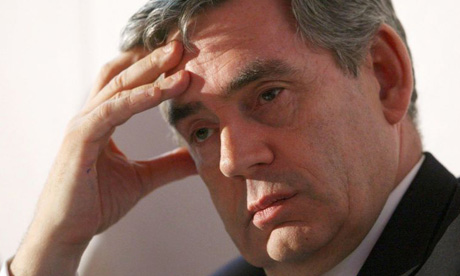
British PM Gordon Brown

A new headache for Gordon Brown? Photograph: Dominc Lipinski/PA

It had to happen sooner or later. Gordon Brown, whom spinners have been schooling in the arts of warm, casual conversation, has revealed a bit of his spikier side.

After meeting voters in Rochdale, he stepped into the prime ministerial limousine with his microphone still on. He was recorded describing a woman he had just spoken to as "bigoted". They'd been discussing, among other things, immigration and the economy.

Is this the gaffe to bury Gordon? Or do you find his frankness refreshing in a sea of platitudes?

Click on link to read comments.

Posted via web from sunwalking's posterous

Tuesday, 27 April 2010

Great News Nick Clegg is up for being Prime Minister - then we might get real democracy

Nick Clegg
to not show photographer information -->

(David Bebber/The Times)

to not show image description -->

Nick Clegg, pictured being interviewed during a train journey to Southampton

here with the id "dynamic-image-navigation" is used so that the innerHTML can be written to by the JS call below. -->

Nick Clegg has told The Times that the Liberal Democrats can supplant Labour and has stated that his ambition is to become prime minister.

He insists that the Liberal Democrats have become the leading progressive force at the ballot box. The latest Populus poll for The Times shows the party still in second place ahead of Labour with only eight days to go.

Mr Clegg believes that the May 6 vote is now a two-horse race between “two competing pitches for change” — the Conservatives and Liberal Democrats. He says that Liberalism has replaced “Labour statism” as the driving argument of the Centre Left.

And whoever wins, he insists that the momentum for reform of the political system is unstoppable. “Reform is now unavoidable. You can’t duck it.”

Click on link to read Times article by Roland Watson and James Harding

Posted via web from Hexham Matters

Monday, 26 April 2010

Why aren't more young people demanding Fair Voting - and why do the Tories & Labour hate Fair voting?

Liberal Democrat leader Nick Clegg, whose party is still riding high in the polls, says that electoral reform could be a deal breaker for a post-election hung parliament arrangement.

Along with a substantial minority in the Labour Party, the Greens, the SNP, Plaid Cymru and other small parties, the Lib Dems argue that proportional representation is key to a fairly elected democratic assembly.

Mr Clegg says that whoever formed the next government will now have to accept that reform of the electoral system is inevitable, and that any Tory opposition to such reform would be a "massive strategic error", reports the BBC.

Changing the unfair first-past-the-post system, which enshrines a two party monopoly in Britain, even though millions of voters are choosing other parties or independents, is something political reformers right across the spectrum say is essential - and it is an important part of what those who want to see a hung parliament are lobbying for (http://hang-em.com/).

Click on link to read article.

Answer to title question - because they want absolute power, and they don't believe in real democracy.

Posted via web from Hexham Matters

What do you mean when you say you/he/she/it is or are British? - Then check out this article my Andrew Mycock

The ‘politics of Britishness’ and related constitutional matters have not – as yet - played strongly in the general election either in manifestos or during campaigning, though all the main parties of the Union agree that further powers be devolved to Scotland, Wales and Northern Ireland. This would not be surprising but for considerable time and effort invested by Gordon Brown, David Cameron and others in engaging in such debates over recent years. The term ‘Britishness’ is absent from all UK party manifestos except for the Democratic Unionist Party. Although the Liberal Democrats identified fairness as ‘an essential British value’, identity politics is generally not considered to be a vote winner. 

Responses to the ‘English Questions’ have also proven muted and vague, with Labour failing to engage at all with constitutional dilemmas largely created by its own radical reform agenda. Moreover, though the Conservative manifesto promises to ‘introduce new rules so that legislation referring specifically to England, or to England and Wales’ and the Liberal Democrats seeking to ‘address the status of England’, scant details are given about how this will be achieved. Although Timothy Garton-Ash claimed the first TV debate woke us up to devolution, Simon Lee rightly noted in an earlier OD post that the absence of England in the election is striking.

Similarly, the extent to which the legacy of the British Empire continues to influence contemporary politics and society has also been overlooked by most parties. Only the Conservatives have acknowledged it as a policy aspiration, promising in their manifesto that they will ‘strengthen the Commonwealth as a focus for promoting democratic values and development’. However, their intention to establish annual limits on non-EU migrants suggest that Conservative views towards the former empire continue to be infused with elements of colonialism –

Click on link to read Andrew's article.

Posted via web from Hexham Matters

UK Election: Yellow Tories?

While British democrats are looking forward to a hung  parliament and a progressive realignment with a referendum on PR, ground is being prepared for a Yellow Tory coalition.

The idea was originally floated with brio and verve by Guido Fawks last Sunday. In yesterday’s update he notes that Nick has said (rightly) it would be inconceivable to allow Brown to “squat” in No 10 if he came third while Cameron has refused to rule out permitting PR if the Lib Dems want to work with him. Matt d’Ancona gave the whole idea a walking in his Sunday Telegraph column.

Fawks argues that Cleggite Lib Dems are not on the left in the way many of his party’s rank and file are supposed to be. Their leadership and the Tories “share key liberal ideological tenets – localism, decentralisation, transparency and a preference for market based solutions”.

Arguably the two most influential big party blogs, Conservative Home and Left Foot Forward both dumped on Fawks.  But Tim Montgomerie on the right and Will Straw on the left share an antipathy to those of us who want modern liberty and an end to the database state. [CORRECTION only Conservative Home has, Straw OPPOSES ID cards, see comment below, and the word "dumped" is unfair to Montgomerie's elegant prose].
 
In his dream scenario Fawks imagined the new double-C, Clegg-Cameron government as follows:

The average age of the cabinet is now 44, the centre-piece of the Queen’s speech is to be a Great Repeal Bill, undoing 13 years of authoritarian legislation and strengthening civil liberties, restricting the growth of the surveillance and database society. The Big Society reform programme promises to fundamentally re-balance state and society in favour of a smaller more open government.  Cable promises an emergency budget within 30 days signalling tough action on the deficit.

PR appears to have slipped out of the priorities, which I hope the Lib Dems would find unacceptable.

Click on link to read the rest of Anthony Barnett's article

Posted via web from sunwalking's posterous

The Liberal Democrat breakthrough can succeed | Anthony Barnett | Comment is free | guardian.co.uk

On Sunday, Gordon Brown said historians would record his approach to the Lib Dems so far as "an attempt to get them involved in what I call a progressive consensus". I don't know about historians, but as far I am concerned, while I'd welcome a realignment on the left, it is now inconceivable this could be led by Gordon Brown.

The reason why he pursued this appeal to the Liberal Democrats is because of the huge potential increase in their support. We want to remind ourselves what is driving it. When Labour attacked the Conservatives over the influence of Lord Ashcroft's millions, William Hague told the House of Commons: "People in glass houses shouldn't throw stones". Two weeks later, when David Cameron demanded an inquiry into former Labour ministers putting themselves up to hire, Lord Mandelson replied: "People in glass houses shouldn't throw stones".

According to Monday's ICM poll, commissioned by Power 2010, "Ninety-six per cent believe it is important that the next government cleans up politics and reforms our democracy". That's everybody. Those 4% who don't agree probably didn't hear the question or were lobbyists.

But it is not going to happen if the two-party duopoly continues. It could, however, start to change if there is indeed a Lib Dem breakthrough. The welcome possibility of a hung parliament could be a historic opportunity to begin the real reform of our democracy that voters now demand.

Click on link to read more of Anthony Barnett's article.

Posted via web from sunwalking's posterous

Charities say parties must commit to a Fairness Test for tackling the deficit | Ekklesia

Church Action on Poverty and other leading charities have today asked for a commitment from all party leaders, and particularly those of the three biggest parties, that tax rises and spending cuts will not hit the poorest hardest.

In a letter sent and published on 26 April 2010, groups including Church Action on Poverty, Child Poverty Action Group, Barnardo’s, the Trades Union Congress (TUC), and the Equality Trust called on the leaders to commit to a ‘Fairness Test’ on any tax rises or spending cuts needed to reduce the deficit.

The test, undertaken by government, would measure the likely impact of any policy to ensure it did not increase income inequality. It would be developed by the Treasury with input from other departments. As well as better informing government decisions, it would allow greater scrutiny by independent bodies.

Niall Cooper, National Coordinator of Church Action on Poverty, commented: “As our politicians make tough decisions in the time ahead, they have the opportunity to make our society fairer. They must ensure that the wealthiest people in our society make a fair contribution, and that those who already have little are not driven further into poverty."

He added: "Politicians talk a great deal about inequality – but a Fairness Test would show that they are really committed to closing the gap between rich and poor.”

Richard Wilkinson, co-director of the Equality Trust, explained: “We’re asking all party leaders to assess the impact that their policies will have on income inequality and ensure that the rich, rather than the poor, shoulder the main burden of reducing the deficit."

“Reducing the deficit could be the perfect opportunity to narrow the record gap between rich and poor in the UK. But if the wrong policies are chosen, inequalities will widen still further, damaging people’s lives and the social fabric of our society,” concluded Wilkinson.

Meanwhile, Shan Nicholas, Chief Executive of Child Poverty Action Group, said: “Whoever is in government to make the tough decision on cutting the deficit, they must put fairness at the heart of the process for families on low incomes. If tax rises or spending cuts lead to greater inequality, the promise all parties have made to end child poverty by 2020 will not be met."

Martin Narey, Chief Executive of Barnardo’s declared that "it is shameful that in this, one of the richest nations in the industrialised world, a child born into a poor family is more likely than ever to start accumulating disadvantage at birth."

"Whoever is in Government must seize the opportunity to reverse the growth in inequality and tackle child poverty so that every baby born in the UK has a more equal chance to contribute to the future wealth and prosperity of our society," said Narey.

Church Action on Poverty (www.church-poverty.org.uk) is an ecumenical Christian social justice charity, which mobilises churches to work alongside others to tackle poverty in the UK.

Click on link to go to the Ekklesia site

Posted via web from sunwalking's posterous

Which of the fairness parties will you been voting for? - Collective wealth of Britain's 1,000 richest people rose 30%, the biggest annual increase in list's 22-year history

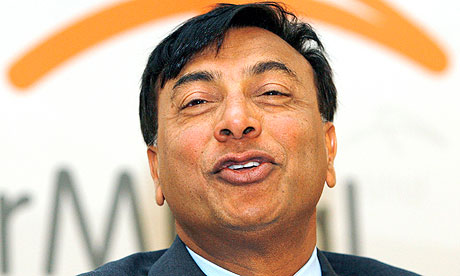
Lakshmi Mittal

Lakshmi Mittal topped the rich list for the sixth straight year. Photograph: Sebastien Pirlet/Reuters

The collective wealth of the country's 1,000 richest people rose 30% last year in the wake of the economic crisis.

Their combined wealth rose by more than £77bn to £333.5bn, the biggest annual increase in the 22-year history of the Sunday Times rich list. The number of billionaires rose by 10 to 53.

Click on link to read the full Guardian report

Posted via web from sunwalking's posterous

HEXHAM & the UK 'Younger voters finally on the move' - see Libby Brooks | Comment is free | guardian.co.uk

After years of hand-wringing over youthful disengagement, it seems that the young people of Britain are finally on the move – in the direction of the nearest polling station. Announcing a record late rush to register last week, the electoral commission was desperate to trumpet the success of a recent Facebook campaign, with just over 40% of those visiting its dedicated website hailing from the coveted 18-24 age group.

Apparently, it's all down to that steady-gazed Nick Clegg (as have been most things over the past seven days, aside from volcanic ash and Jennifer Aniston's continuing inability to find lasting love). Nearly half of registrations came after last week's first leaders' debate, while YouGov figures show that the Lib Dem surge evidenced disproportionately among the young. Clegg himself stated his untrammelled joy at the prospect of increased youth participation in an article for the Guardian last week.

But the assumption that the younger generation has only just woken up to Old Politics thanks to its presence in New Media is a dubious one, as is the impression that first-time voters are more likely to plump for the Anyone-But-You-Lot candidate than the rest of the electorate. Perhaps it was just because they couldn't see he had his hands in his pockets, but Radio One listeners were plenty happy to monster Clegg about immigration policy and expenses on a live phone-in, just as they had Gordon Brown before him. As usual, when politicians actually talk to young people rather than about them, they discover they are as nationally disenchanted, locally primed and non-consensual as everyone else. When Cameron next attempts to explain what he means by Big Society (ideally without an egg-throwing unhuggable hoodie in the background), he would do well to remember that, over the last year, it was the under-25s, as well as the over-65s, who scored the highest levels of volunteering in the country.

Click on link to read full article by Libby Brooks - Guardian online

Posted via web from Hexham Matters

Sunday, 25 April 2010

Look what Cameron intends to do to the North-East - shades of Thatcher's cruelty - The Guardian

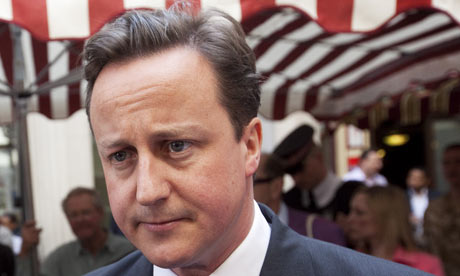
David Cameron said the size of the state had gotten too big

David Cameron said the size of the state had got too big. Photograph: David Levene

David Cameron sparked a fresh row on public spending last night when he indicated that the north-east of England and Northern Ireland may face a squeeze under the Tories.

In a move condemned by Labour as "alarming", the Tory leader said the state's share of the economy was too big in some parts of the country.

"In Northern Ireland it is quite clear – and almost every party accepts this –that the size of the state has got too big," Cameron told Jeremy Paxman in an interview on BBC1.

"We need a bigger private sector. There are other parts of the country, including in the north-east. The aim has got to be to get the private sector, to get the commercial sector going.

"Over the next parliament we have got to see a faster growing private sector, we've got to broaden our economic base and we need to have a rebalancing of the economy between the commercial and private sector on the one hand and between the state sector on the other."

Labour was quick to criticise Cameron. Liam Byrne, the chief secretary to the Treasury, said: "Alarmingly for regions outside London [David Cameron] claimed investment in the regions like the north- east was unsustainable, while at the same time saying that tax cuts for millionaires were sustainable.

"With every passing day David Cameron's big society sounds more and more like the same old Tories – tax cuts for the few at the expense of cuts to essential services and to our regions."

Hexham, the North-East, and the UK need a new politics of real democracy, not a Cameron-Thatcher devastation. If you have a job and don't want to lose it don't vote Tory.

Posted via web from sunwalking's posterous

Saturday, 24 April 2010

Ethics election poll watch: Hung parliament on cards as race tightens but 'others' losing ground (ComRes) | Ekklesia

The ComRes poll for tomorrow's Independent on Sunday and Sunday Mirror shows a tighter race between the big 3 parties, but has 'others' losing ground significantly:

Con 34% (-1)
Lib Dem 29% (+2)
Lab 28% (+3)
Other 9% (-4)

(compared with most recent ComRes poll published 21 April)

This leaves the Conservatives short by 55 of a majority on www.electoralcalculus.co.uk as follows:

Con 271
Lab 254
LD 93

Andrew Hawkins, chairman of ComRes points out:

· Overall it looks like the Lib Dems had a very modest boost from Thursday night although Gordon Brown’s performance has clearly boosted his party’s rating

· Turnout looks set to be really quite high – 66% say ‘absolutely certain’ to vote, the highest registered of this campaign

· The number of people who are ‘absolutely certain’ to vote but who are undecided about who to vote for now stands at 3.3million British adults. This compares with 2.5m last week and 5m the previous week ie pre-first debate

· Lib Dem support is still strongest among the younger age groups – 41% among 18-24s

· Labour is ahead among C2s and DEs ie its core social groups while 35% of ABs say they’ll vote Lib Dem

· The Lib Dem figures are particularly strong in the North of England – this is entirely consistent with their instant poll on Thursday evening

Posted via web from sunwalking's posterous

Liberal Democrats popular all-round? | YouGov

LibDemsOne would be forgiven for thinking that there is not a single news website, programme, newspaper or political magazine that has been without updates of the ‘Cleggmania’ sweeping across the country. The Lib Dems climbed to a high of 33% in the voting intention polls this week, and it seems that this figure could be higher if Clegg’s party were perceived by the majority to have a significant chance of winning the General Election come May 6th. Just under half the country (49%) would vote for the Liberal Democrats if they were seen to have a reasonable chance of winning. Only 25% would vote for the Conservative party in these circumstances; a comparatively meagre 19% would vote for Labour.

An impressive 29% of the public would be ‘delighted’ to see a Liberal Democratic government after the next election, while a further 38% claimed they wouldn’t mind. Only slightly fewer (25%) say they would be delighted if a Conservative government rose to power on May 6th, but in contrast to the Lib Dems they are not supported by as many who ‘wouldn’t mind’ (20%). Only 18% would be delighted to see a fourth term for a Labour government.

Click on link to read full article

Posted via web from Hexham Matters

How New Labour have stolen the UK people's freedom and democracy right under the ignorant noses of the masses - Vote Independent or Lib Dem in Hexham & UK

How New Labour have stolen the UK people's freedom and democracy right under the ignorant noses of the masses - Vote Independent or Lib Dem in Hexham & UK

Comedian Shappi Khorsandi looks into how New Labour have stolen the UK people's freedom and democracy right under the ignorant noses of the masses, systematically destroying freedom of speech - especially against the government, and turned a democratic country into a police state worthy of the Adolf Hitler, Stalin, Chairman Mao, and the New World Order.

If Labour are going to work with the Lib Dems they better ditch many of their ways of behaving.

And don't forget that much of this started with Thatcher.


-0-

Posted via email from sunwalking's posterous

Tories want us to believe they've changed. Ho ho! - slammed over climate commitment | Ekklesia

The commitment of prospective Conservative MPs to tackling climate change is under question today after it was revealed that only two Tory candidates have backed a package of key measures to slash UK emissions.

The green measures, which have been put forward by Friends of the Earth, have been supported by scores of Labour and Liberal Democrat candidates.

During the election campaign, thousands of Friends of the Earth supporters contacted their candidates to support the environmental charity's four climate pledges. So far these have been backed by 285 Green Party candidates (out of around 300), 156 Liberal Democrats, 85 Labour and only two Conservatives.

Of the three main parties, only Nick Clegg has replied to a letter co-signed by over 8,000 supporters - asking them to commit to real action to tackle climate change.

In Hexham and the UK we want real change, real democracy not the 'We'll say anything to win a few votes!" of the tired old, corrupted parties.

Click on link to read all of the Ekklesia article.

Posted via web from sunwalking's posterous

Friday, 23 April 2010

Sun tight-lipped on poll 'censorship' claims | Charter 2010

The Sun has declined to comment on Liberal Democrat claims that it censored one of its own polls showing significant support for the party, The Independent reports.

Lib Dems are said to be angry that the pro-Tory Sun failed earlier this week to publish details of a YouGov poll - commissioned by the Murdoch-owned tabloid - which suggested that voters fear a Liberal Democrat government much less than a Conservative or Labour one.

The unpublished findings contained a raft of positives for the Nick Clegg's party - not least the suggestion that only 21 per cent viewed with dismay the prospect of a Lib Dem administration, against 45 per cent fearing the Tories and 51 per cent Labour. It further indicated that voters would switch to the Lib Dems in landslide-scale numbers if they thought the party had a significant chance of winning the election - an unlikely prospect under the current first-past-the-post system.

Prominent Lib Dem Loard Oakeshott told the Indy: "The numbers show that half the country cannot stand Gordon Brown and the other half can't stand David Cameron. I wonder why The Sun wouldn't share this news with its readers?"

YouGov president Peter Kellner said in a commentary on the unpublished poll that it was no longer outlandish to ask whether Clegg could end up as prime minister.

Posted via web from sunwalking's posterous

Thursday, 22 April 2010

Channel 4's FactCheck Blog - Will hung parliament lead to IMF bailout?

truth level 3

The claim
“If the British don’t decide to put in a government with a working majority and the markets think that we can’t tackle our debt and deficit problems, then the IMF will have to do it for us. That will be the view outside.”
Ken Clarke, Shadow Business Secretary, 21 April 2010

The background
In a press conference earlier today Ken Clarke warned of dire consequences in the financial markets if the election resulted in a hung parliament.

According to Ken, the market reaction could force the UK to go cap-in-hand to the International Monetary Fund for a loan, just like Greece is having to do now.

Pressed by Channel 4 News, the shadow chancellor, George Osborne, backed Mr Clarke’s comments, saying that the last time the IMF came in was when “the governing party did not have a workable majority in parliament” in the late 1970s.

Mr Osborne added that people needed to be aware of the consequences of a hung parliament: “I don’t think people should underestimate the economic consequences of political instability in their country when at a time when we are running one of the largest budget deficit in the developed world, when people have questioned our credit rating and when you can see there is a very serious problem with unemployment and business confidence.”

So should British voters be worried of the economic consequences of a hung parliament, or is it just political scare-tactics?

The analysis

Britain is unusual that in it rarely has a hung parliament – the last time one was elected was in 1974. But countries like Spain, Germany and Holland regularly return a minority government.

In fact, Professor Luis Garicano of the department of management at the London School of Economics, says that the claim that a hung parliament could spook the markets to the extent that an IMF loan is needed is an “absurd proposition”.

“I’m very surprised that the press are so insistent in this point,” says Professor Garicano. “It’s not going to make any difference from the outside. I think every foreign economist is flabbergasted by the suggestion.”

Professor Garicano says the real concern of the markets would be the progress of the new government in reducing the deficit and adds that the UK is fortunate that the three main parties are well regarded internationally and similarly-minded on economic issues.

Professor Garicano’s assessment is supported by another academic, Professor Philip Booth of the Institute of Economic Affairs. He says the three main parties’ approach to tackling the UK’s debt and deficit are “more or less the same”.

Professor Booth echoes Professor Garicano that the main issue influencing whether or not the IMF will be called in will be the new government progress in tackling the deficit. But he adds this is a medium term problem that won’t be affected by short-term political instability.

Professor Booth also casts doubt on the influence of political instability on the problems that led to the Callaghan government’s approach to the IMF in 1976. He says it actually was the result of years of financial mismanagement by both Labour and Conservative governments.

The verdict

While markets don’t like uncertainty, our economists agree that having three main parties with similar economic outlooks provides some degree of stability.

So despite the Conservatives’ insinuations, a hung parliament would not lead directly to an IMF bail out. In the words of Professor Booth, this particular Conservative claim is a “red herring”.

But – as all of this is opinion not fact – FactCheck will wait to see what happens post May 6th before declaring fact or fiction.

Click on link to read more of Channel 4's FactCheck-ing

Posted via web from sunwalking's posterous

About Me

My photo
My focus is inter-spiritual living

ShareThis